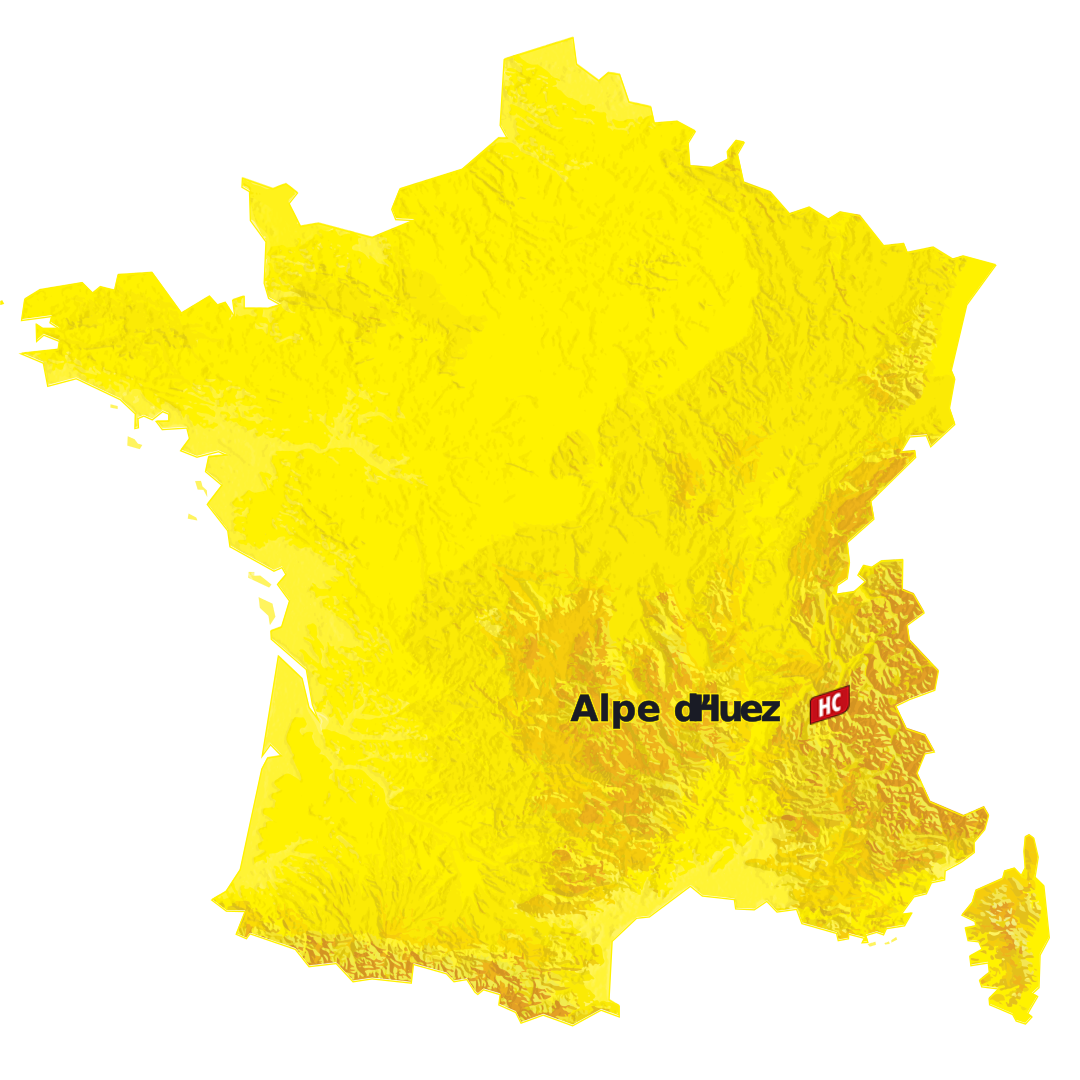
Alpe d'Huez is one of the most iconic climbs in the Tour de France, both for its physical challenge and its legendary place in cycling history. First included in the race in 1952, when Fausto Coppi claimed victory on its slopes, the climb has since become synonymous with dramatic attacks, decisive time gaps, and raucous crowds packed along its 21 hairpin bends. Rising 13.8 kilometers from the village of Bourg-d'Oisans to a ski resort summit at 1,850 meters, with an average gradient of 8.1%, Alpe d'Huez demands a perfect mix of power, pacing, and mental resilience. Its tight switchbacks each bear the name of a past stage winner, giving the ascent a living memory of Tour legends and immortal performances.
Beyond the numbers, Alpe d'Huez carries a unique atmosphere unmatched elsewhere on the Tour. On race day, fans from across the world—many dressed in outrageous costumes—line the narrow roads, especially through the infamous Dutch Corner, where seas of orange-clad supporters create a carnival-like frenzy. The climb has often been used deep in the Tour's third week, turning it into a stage where fatigue, altitude, and pressure converge to shape the general classification. Whether it's the lone breakaway triumph, a dramatic GC battle, or the unforgettable chaos of its fan-filled hairpins, Alpe d'Huez remains a stage that can define careers and write some of the Tour's most enduring stories.
Use ← & → to navigate stage milestones.