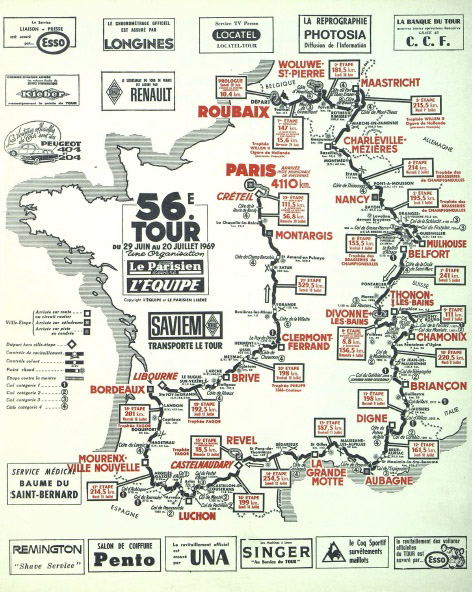
The 56th edition of the Tour de France begins on June 28, 1969, in Roubaix, contested across a prologue and 25 stages over 23 days without a single rest day before concluding in Paris on July 20.
The race marks a return to commercial trade teams after two seasons contested by national squads, restoring the structure that would define modern professional cycling. The route features long, demanding stages through the Pyrenees and Alps, with the Col du Galibier serving as the race's highest point, while the absence of rest days places an added premium on recovery and endurance.
The race opens amid controversy surrounding Eddy Merckx and his Tour de France debut. Just weeks before the start, the reigning world champion had been disqualified from the Giro d'Italia following a positive doping test and faced the prospect of missing the Tour altogether. After appeals and negotiations involving cycling's governing bodies, Merckx is ultimately cleared to ride. Far from diminishing expectations, the episode only heightens anticipation around his Tour debut. At just 24 years old, Merckx arrives as the overwhelming favorite after a remarkable spring campaign that included victories at Paris-Nice, Milan-San Remo, and the Tour of Flanders, prompting many to wonder not whether he can win the Tour, but whether anyone can stop him.
Standing in his way is an experienced group of established contenders. Defending champion Jan Janssen returns seeking to repeat his 1968 success, while former winners Felice Gimondi and Roger Pingeon bring proven Grand Tour pedigree and climbing strength. Raymond Poulidor remains the enduring favorite of French fans as he pursues the elusive Tour victory that has long escaped him. Yet despite the depth of the field, much of the attention centers on Merckx and the possibility that cycling is witnessing the arrival of its next dominant champion.